Measure your waist by two different, equally official instructions and you can get two different numbers — not because you did it wrong, but because "the waist" isn't one universally agreed-upon spot. NIH and WHO define it at different landmarks, and the gap between them is large enough to matter.
The short answer
- NIH method: measure just above your hip bones, tape level, after a normal exhale.
- WHO method: measure at the midpoint between the bottom of your last rib and the top of your hip bone, after a normal exhale.
- The two methods produce genuinely different numbers on the same body — on average 0.8cm larger for men and 3.2cm larger for women when using NIH's landmark instead of WHO's.
- Neither is "more correct." What matters for tracking your own trend is picking one and measuring the same way every time.
The NIH method
The National Institutes of Health instructs: "stand and place a tape measure around your middle, just above your hip bones. Measure your waist just after you breathe out" (NHLBI). This is the simpler of the two protocols to do alone at home — the landmark is a bone you can feel directly, with no midpoint to estimate.
NIH also publishes risk thresholds tied to this specific method: a waist circumference above 35 inches in women, or 40 inches in men, is associated with higher risk of heart disease and type 2 diabetes. Those thresholds only mean what they're supposed to mean if the measurement was taken with the NIH landmark — using a different landmark and comparing the result to an NIH threshold is comparing two different things.
The WHO method
The World Health Organization's protocol is more involved. A person is measured standing, and the landmark is found by locating two points — the lower margin of the last palpable rib, and the top of the iliac crest (hip bone) — then measuring at the midpoint between them, again after a normal exhale (Ma et al., 2022).
That midpoint typically sits somewhat higher and narrower than "just above the hip bones," which is the direct reason the two methods disagree. Clinical and research settings that want cross-country comparability tend to use the WHO protocol, since it's the version specified in international surveys across Europe, Asia, and South America.
How much the two methods actually differ
This isn't a theoretical discrepancy. A 2016 analysis of 2,405 US adults, each measured with both protocols, found the NIH method reads larger than the WHO method by an average of 0.8cm in men and 3.2cm in women (Ma et al., 2022).
The size of that gap — nearly four times larger for women than for men — has a real consequence: some people classified as having abdominal obesity under the NIH method were not classified that way under the WHO method, simply because WHO's landmark measured about 3cm lower on average in the same women. Nobody's body changed between the two measurements. Only the ruler's starting point did.
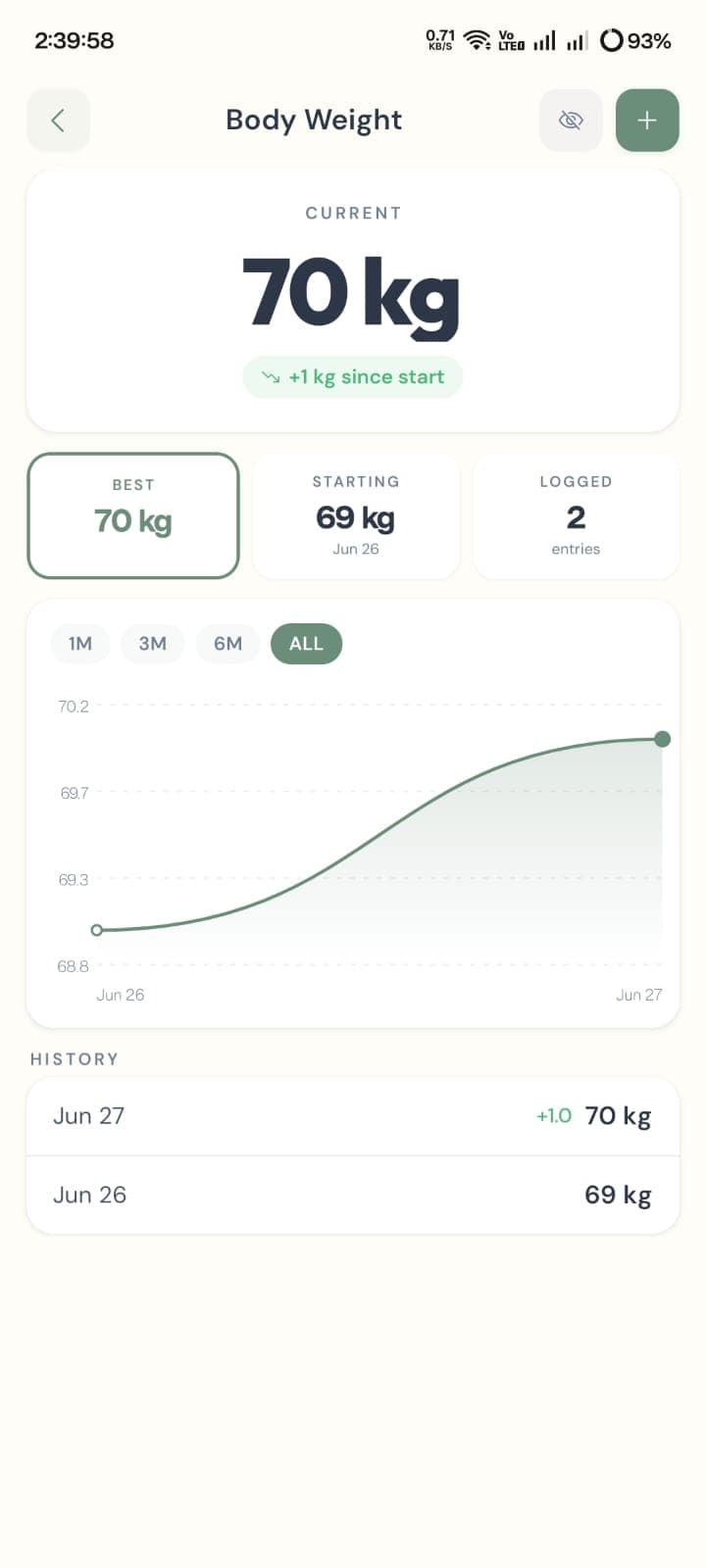
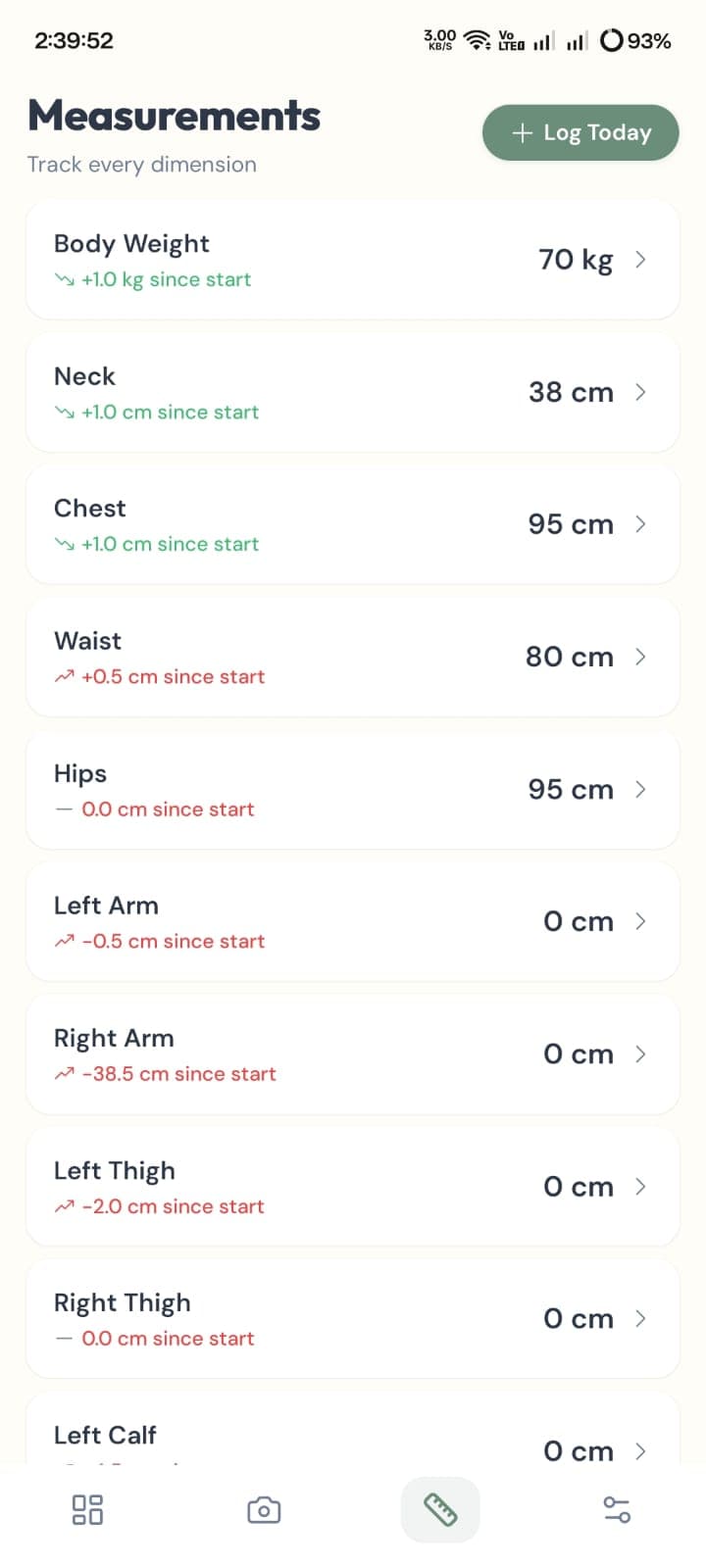
This is the practical reason to care about a distinction that sounds academic. If you measured your waist with one protocol last month and a different one today, an apparent 2 or 3cm "increase" might be entirely explained by which landmark you used — not by anything that happened to your body. It's the same kind of false signal covered in what actually counts as a recomposition sign: a number moving is not automatically meaningful until you've ruled out the measurement itself as the cause.
Getting a reading you can actually trust
Both protocols agree on everything except where to put the tape. The rest of the technique matters just as much as the landmark:
- Stand relaxed, weight evenly on both feet, not mid-stride.
- Breathe out normally before reading the tape — not a forced exhale, not holding your breath, not sucking in.
- Keep the tape horizontal, level all the way around. A tape that rides up in the back or dips at the sides will read wrong even at the correct landmark.
- Snug, not compressing. The tape should sit against the skin without indenting it.
- Skip heavy clothing. Waistbands and thick fabric add inconsistent bulk between measurements.
- Measure at a consistent time, ideally morning, before a meal — bloating and food volume can shift a same-day reading by more than the difference between measurement methods.
These sources of error are often larger than the method gap itself, which is exactly why the same discipline that makes progress photos comparable — same conditions, every time — applies just as much to a tape measure.
Which method should you actually use
For personal tracking, the honest answer is: it doesn't matter which one you pick, as long as you never switch. The value of a waist measurement over time comes from comparing this month's number to last month's number taken the same way — not from matching either number to a published health threshold with surgical precision.
If you do want to compare your number against NIH's published risk thresholds, use the NIH landmark — that's the method the thresholds were built on. If you're following international research or a program that specifies WHO's protocol, use that one instead. What breaks a tracking record isn't picking the "wrong" method. It's picking a different one halfway through and reading the resulting jump as a real change, the same trap that applies to reading any single number as a verdict rather than as one point in a trend.
Bottom line
NIH and WHO measure the waist at different landmarks, and the difference between them is real — small for men, large enough to matter for women. Pick one method, write down which one you used, and keep the rest of the technique — breathing, tape tension, timing — consistent every time you measure. That consistency is what turns a waist measurement into a trend worth reading, regardless of which landmark you started from.