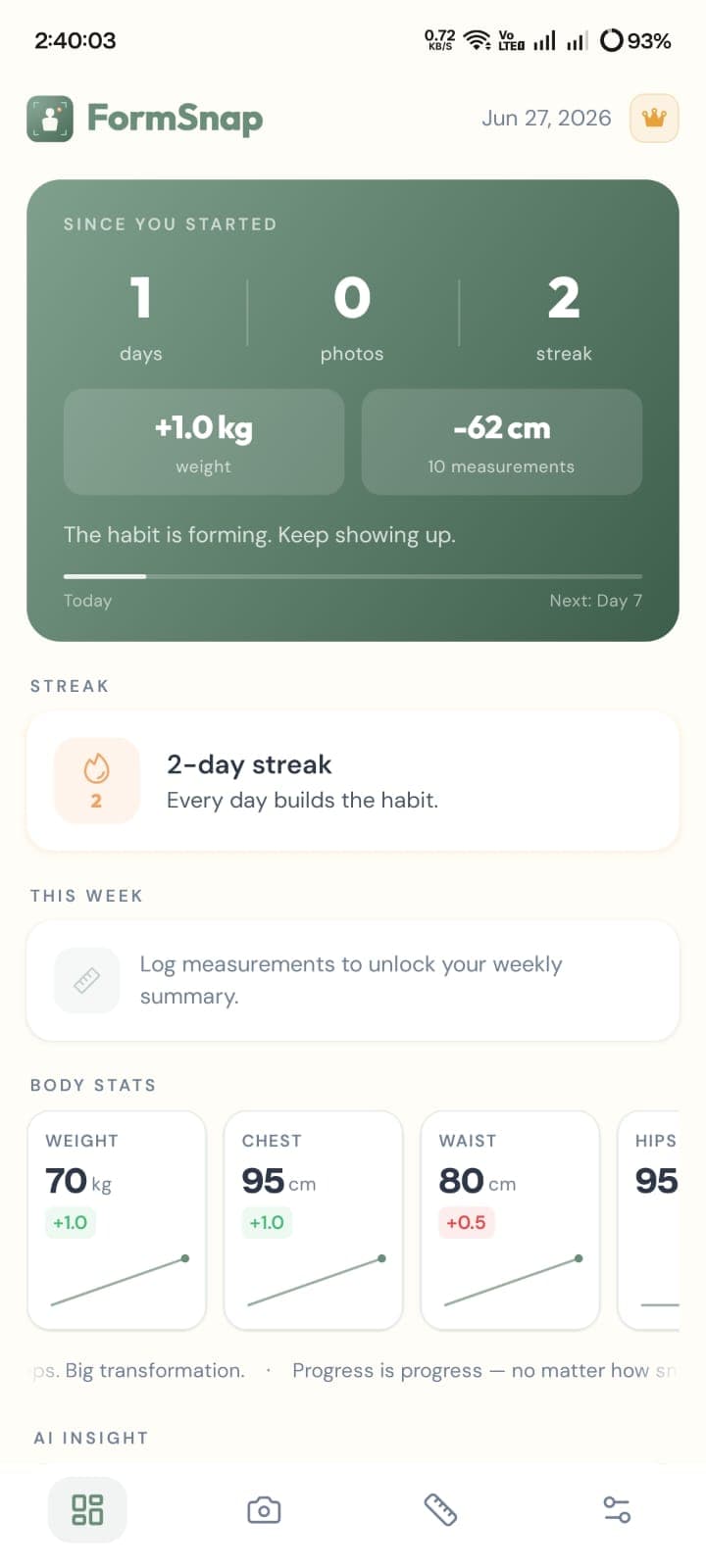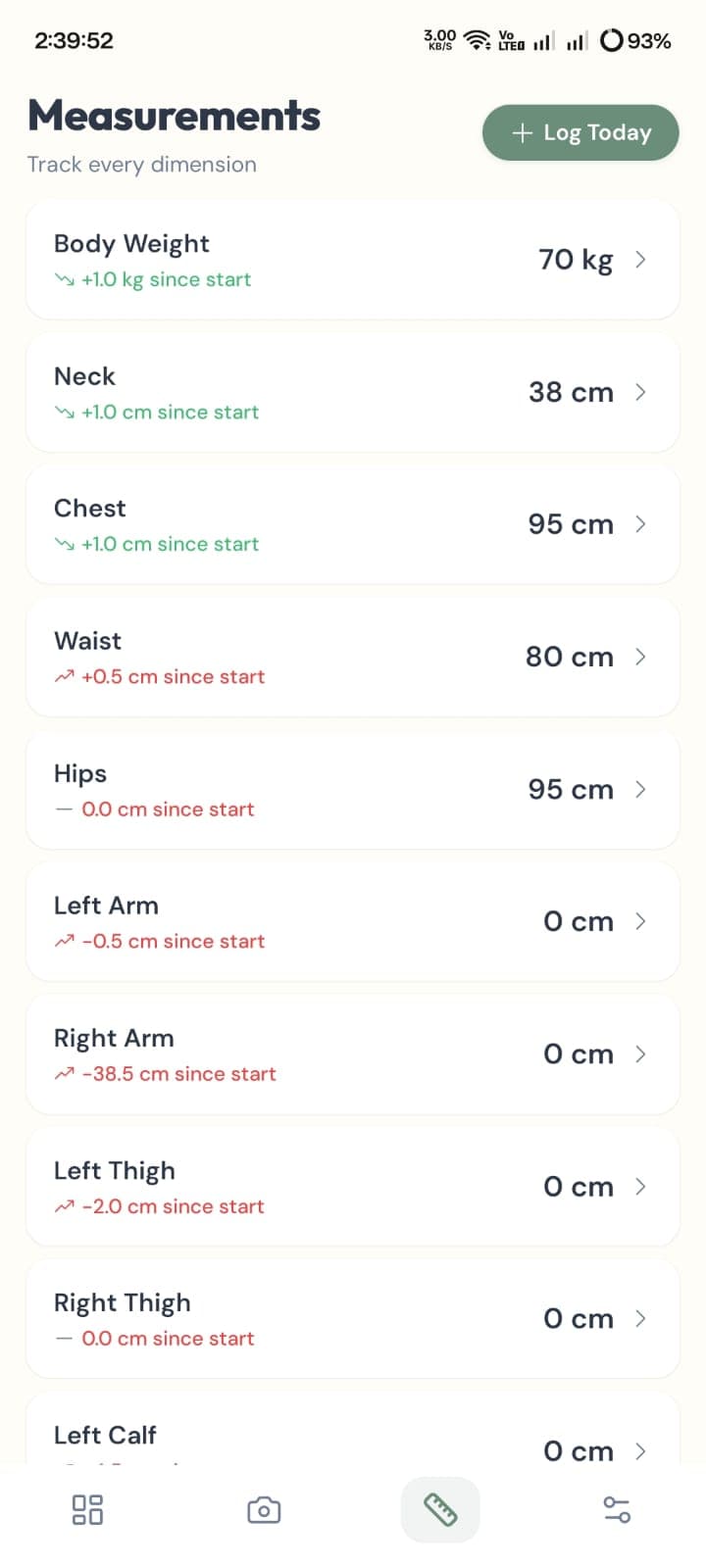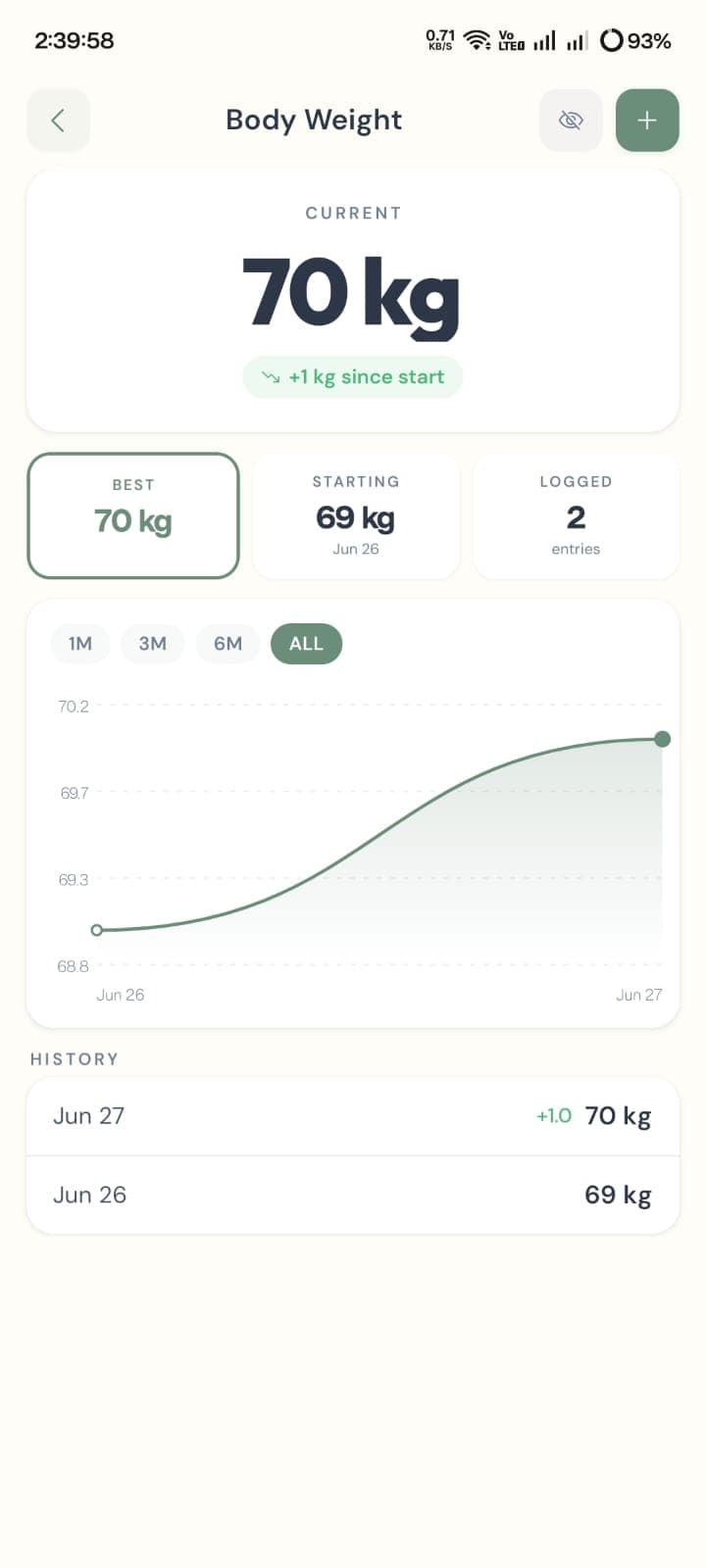
Body weight and tape measurements are not competing verdicts. They are different signals.
A scale tells you total mass at one moment. A tape tells you the circumference of a specific area. Neither, by itself, explains exactly how much fat or muscle you gained or lost—but together they provide more context than either alone.
The short answer
- Use the scale to follow the trend in total body weight.
- Use a tape to follow changes in specific circumferences.
- Use progress photos to preserve visible shape and proportion.
- Use consistent conditions so all three signals contain less noise.
If weight stays similar while waist size decreases, that is a real change worth recording. It is not proof of a precise amount of fat loss or muscle gain, but it is more informative than declaring that “nothing happened.”
What a bathroom scale measures
A scale measures total mass: fat, muscle, bone, organs, water, food in the digestive system, and everything else.
That makes it useful and limited at the same time.
Hydration alone can influence short-term readings because water accounts for a substantial portion of body weight (NIH). Research has also found that weighing at the same time each day reduces variability compared with weighing at different times (PubMed: Vivanti et al.).
This is why one reading should not be treated as a trend.
A better weighing routine
For more comparable readings:
- Use the same scale on a hard, level surface.
- Weigh at roughly the same time.
- Wear similar clothing—or none.
- Use the bathroom first.
- Read the weekly trend rather than reacting to one day.
If daily weighing affects your mood or behavior negatively, use a less frequent schedule or skip it. A tracking method is only useful if it supports your wellbeing.
What tape measurements add
A tape measure records circumference at a chosen location. Common areas include:
- Neck
- Chest
- Waist
- Hips
- Upper arms
- Thighs
- Calves
The CDC describes waist circumference as a measure that adds information beyond BMI because it considers abdominal size (CDC). That health context does not mean every home measurement should be interpreted as a diagnosis. It does show why location-specific measurements can answer questions total weight cannot.
Tape measurements are sensitive to technique
A one-centimeter change can be real, or it can come from placing the tape slightly higher, pulling it tighter, changing posture, or measuring during a different part of the breath.
To reduce that noise:
- Measure the same anatomical location
- Keep the tape level around the body
- Use gentle, consistent tension
- Stand relaxed
- Measure at the same point in your breathing cycle
- Repeat the measurement once if the result looks unusual
Write down your method. “Waist at navel after normal exhale” is easier to repeat than “waist.”
Why the scale can stay flat while measurements change
Total body weight can remain similar while the distribution of tissue and water changes. Resistance training, nutrition, glycogen storage, hydration, digestion, and the timing of measurements can all affect the signals you see.
A flat scale plus a smaller waist does not let an app calculate your exact body-composition change. It does, however, give you evidence that the scale alone is not describing the entire period.
Look for a pattern:
- Is the waist trend down across several check-ins?
- Are photos taken under consistent conditions showing a change?
- Is clothing fitting differently?
- Is training performance improving?
- Is the scale trend actually flat, or did one reading capture your attention?
The answer is usually in the combination.
Which measurements should you track?
Track only the measurements connected to your goal.
For general fat-loss tracking
A small set might include:
- Weight
- Waist
- Hips
- Chest
- One front and one side progress photo
For muscle-gain tracking
You might add:
- Left and right upper arm
- Left and right thigh
- Chest
- Calves
More data is not always better. Every extra field adds time and another opportunity for inconsistent technique.
How often should you measure?
Weekly, every two weeks, or monthly can all work. Circumferences often change more slowly than day-to-day weight, so measuring too frequently may create frustration without adding useful information.
Use the same interval and conditions. A monthly measurement you repeat carefully can be more valuable than an inconsistent daily one.
A simple way to read mixed results
| Scale trend | Measurement trend | A reasonable interpretation |
|---|---|---|
| Down | Waist down | Both signals are moving in the same direction |
| Flat | Waist down | There is change the scale alone does not show |
| Up | Muscle-area measurements up | Review training, photos, waist, and the longer trend |
| Noisy | Stable | Standardize timing and collect more check-ins |
These are prompts for review, not diagnoses.
Bottom line
The scale is not “lying.” It is answering a narrow question accurately: how much mass is on it right now.
The mistake is asking that one number to explain everything. Pair it with repeatable measurements and consistent photos, then judge the direction across several check-ins. Progress becomes much easier to understand when no single signal has to carry the whole story.