Body recomposition generally refers to changing the relative amounts of fat and lean tissue in the body. Because those changes can move in different directions at the same time, total body weight may not tell the whole story.
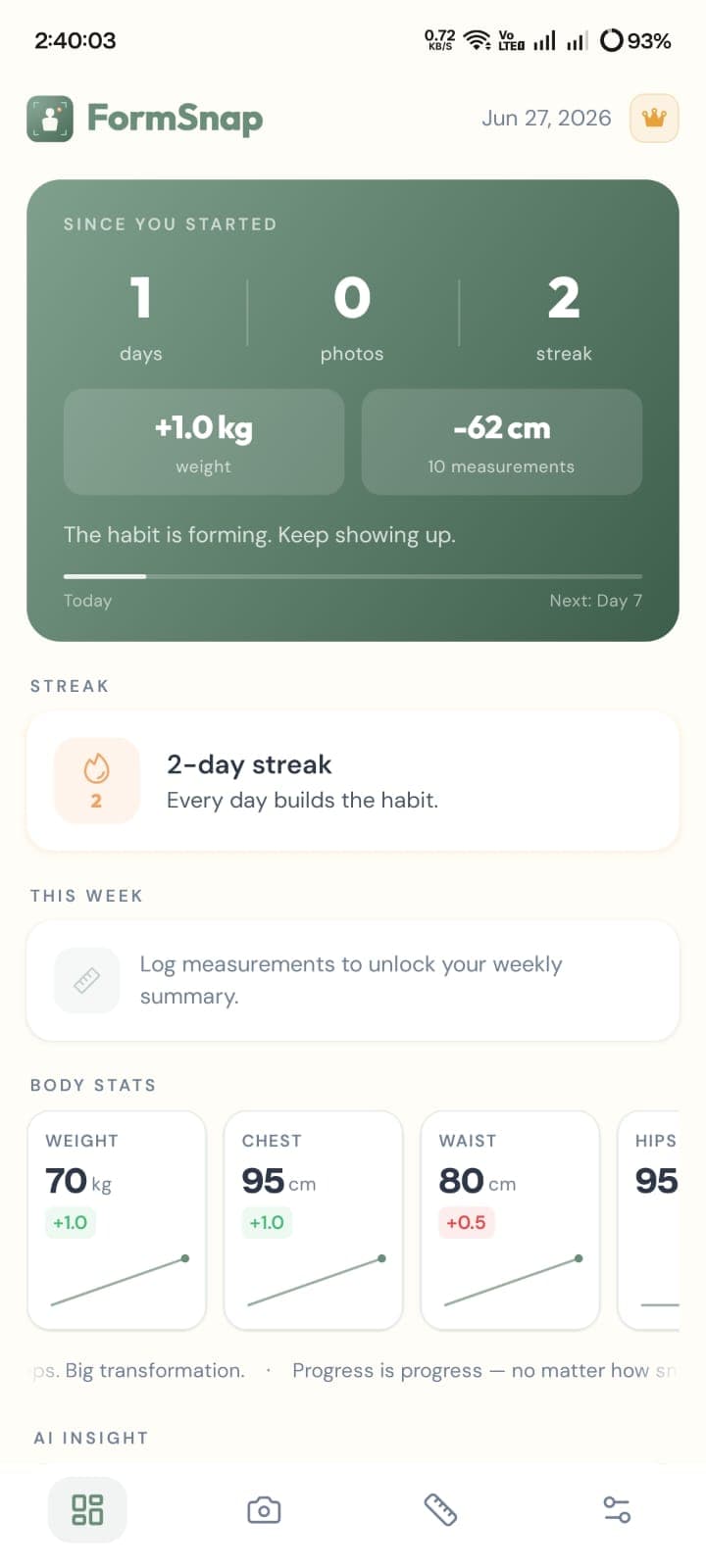
No home app, tape, or progress photo can confirm your exact body composition. But a consistent record can reveal several useful signals that deserve attention.
The short answer
Possible signs of body recomposition include:
- Waist measurements trending down
- Progress photos showing shape changes
- Clothing fitting differently
- Strength or work capacity improving
- Muscle-area measurements changing
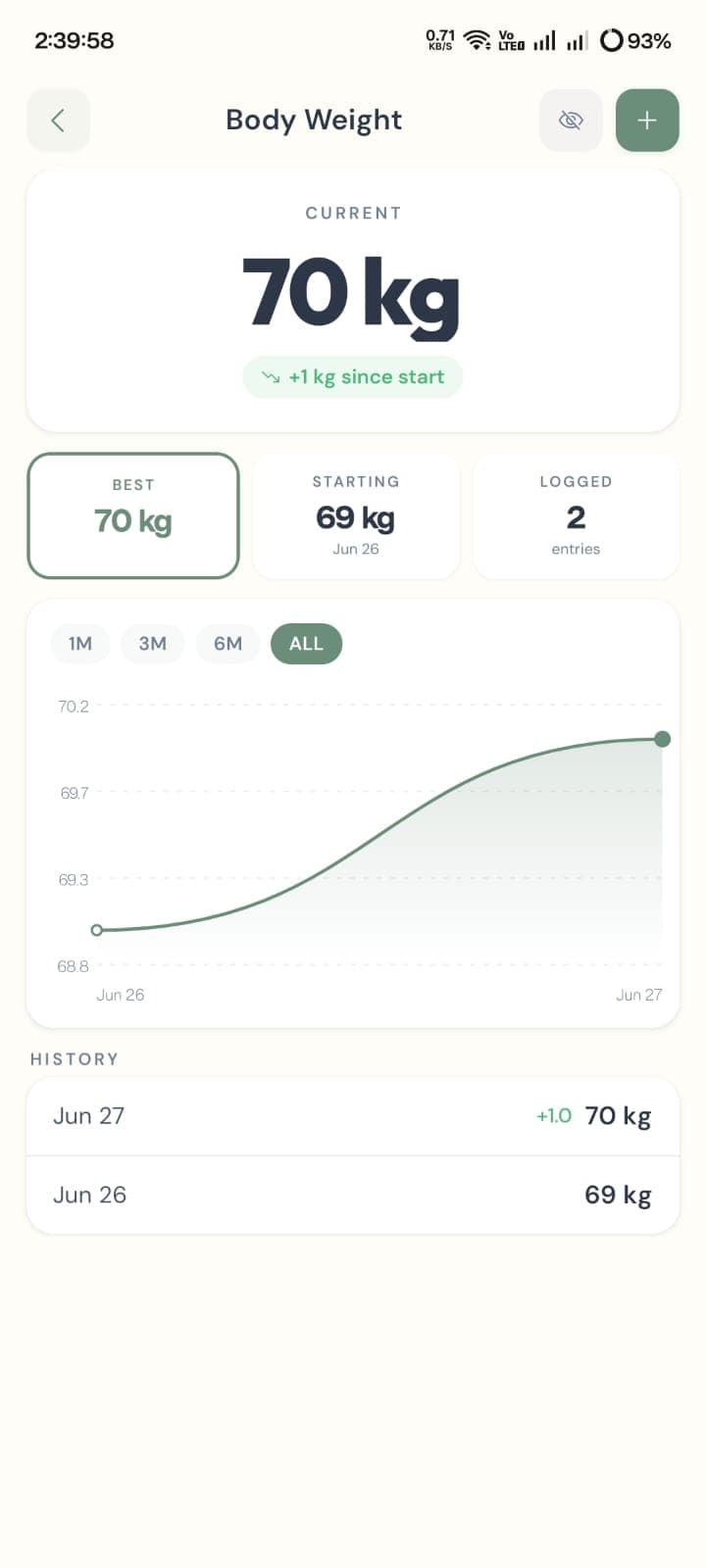
- Weight remaining stable over time
- Several signals agreeing across multiple check-ins
The seventh sign matters most. One isolated result can be noise; a pattern is more useful.
1. Your waist trend changes
Waist circumference provides location-specific information that body weight cannot. The CDC notes that waist circumference adds health context because BMI does not directly measure abdominal fat (CDC).
For progress tracking, focus on a repeatable method rather than a single threshold:
- Use the same tape
- Measure at the same location
- Keep the tape level
- Measure after a normal exhale
- Compare the trend across several dates
A smaller reading once may be technique. A consistent downward pattern is more meaningful.
2. Standardized photos look different
Photos can preserve changes in outline, posture, and proportion that numbers miss. They can also mislead when lighting, camera height, pose, distance, or clothing changes.
Use front, side, and back photos taken under the same conditions. Compare dates several weeks apart, not consecutive days.
Look for changes without labeling the earlier photo as “bad.” The purpose is evidence, not shame.
3. Clothing fits differently
A waistband feeling looser or a shirt fitting differently through the shoulders can be a practical signal. Clothing fit is not standardized, but it connects the data to daily experience.
Use the same garment as an informal reference. Washing, fabric stretch, and different brands make comparisons between garments unreliable.
4. Training performance improves
If you can perform more repetitions, use more resistance with similar technique, recover better between sets, or complete the same workout with less effort, your capacity has changed.
Performance is influenced by many factors—including skill, sleep, motivation, and program design—so it is not direct proof of muscle gain. It is still useful context when it improves alongside measurements and photos.
Track a small number of repeatable exercises instead of trying to turn every workout into a test.
5. Measurements around trained areas change
Arm, thigh, chest, or calf measurements may change during a muscle-building phase. But circumference includes muscle, fat, fluid, and measurement error.
Do not measure immediately after training if you want a stable comparison; temporary muscle swelling can change the result. Use the same time relative to your workouts and keep tape tension consistent.
Left and right measurements can also help you notice whether a difference persists, but small asymmetries are common. Do not diagnose an imbalance from a home tape measurement.
6. Body weight stays relatively stable
Stable weight does not prove recomposition. It simply means total mass is not changing much over the period you are viewing.
Short-term scale readings can shift with hydration, food, and measurement timing. NIH explains that water makes up a large share of body weight (NIH), and a small study found less variation when weight was recorded at the same time each day (PubMed).
Use a longer trend. Then ask whether waist, other measurements, standardized photos, and training performance changed during the same dates.
7. Multiple signals agree
This is the strongest practical sign available from a home record.
For example:
- Weight trend: roughly stable
- Waist trend: gradually down
- Progress photos: visible change under consistent conditions
- Training: several lifts improving
- Clothing: waistband looser
Together, those observations tell a more coherent story than any one line on its own. They still do not quantify exact fat loss or muscle gain, but they help you avoid dismissing meaningful change.
A simple monthly recomposition check-in
Use a schedule that is slow enough to reduce noise:
Weekly
- Record body weight under similar conditions
- Log one or two key training indicators
Every two weeks
- Measure waist and any goal-specific areas
Every four weeks
- Take standardized front, side, and back photos
- Compare against the start date and previous month
- Write one sentence about clothing fit, energy, or recovery
This schedule is an example, not a rule. If frequent tracking makes you anxious or leads to compulsive behavior, track less often or ask a qualified professional for support.
What does not prove recomposition?
Avoid treating these as confirmation on their own:
- One “good” progress photo
- One lower waist measurement
- A smart-scale body-fat estimate
- A temporary workout pump
- One week of stable weight
- A compliment from someone else
All can be part of your experience. None is a precise body-composition assessment.
When to use professional assessment
If you need accurate body-composition information for medical care, athletic decisions, or research, use an appropriate professional assessment and discuss its limits with a qualified practitioner. Even formal methods have protocols and sources of error; consistency still matters.
Bottom line
Body recomposition is easier to notice when you stop forcing one metric to explain it.
Keep weight, measurements, photos, and performance aligned by date. Standardize the method. Review the trend at sensible intervals. The goal is not to manufacture proof—it is to preserve enough honest context that slow progress has somewhere to become visible.