A 1.5kg jump on the scale overnight feels like it should mean something. Almost always, it doesn't — at least not in fat. Body fat does not appear or disappear at the rate scale weight moves. What actually swings your daily number is water, food mass, and glycogen, and the size of those effects is bigger than most people expect.
The short answer
- A 1 to 2kg (2-4 lb) daily swing is normal and has nothing to do with fat gain or loss.
- Glycogen binds 3 to 4 grams of water per gram stored. Refilling glycogen after a low-carb stretch or a hard training block can shift body weight by more than a kilogram within days.
- Sodium's effect on scale weight is less clear-cut than the popular story. Some research directly contradicts the idea that a salty meal reliably causes next-day water retention.
- For many women, the menstrual cycle adds a real, measured ~0.45kg around menstruation — fluid, not fat.
- None of this shows up as a change in body composition. It shows up as noise on top of whatever your real trend is.
Glycogen is the biggest lever most people don't know about
Your muscles store carbohydrate as glycogen, and glycogen does not sit dry — it binds water. The accepted figure, going back to classic physiology research by Olsson and Saltin, is that 1 gram of muscle glycogen holds 3 to 4 grams of water (narrative review, via PMC).
That ratio adds up fast. A well-fed adult carries several hundred grams of glycogen. Deplete it — through a hard training block, a low-carb stretch, or just under-eating for a few days — and you shed both the glycogen and the water bound to it, which is part of why weight can drop quickly at the start of a diet without any real fat loss yet. Refill it, and the reverse happens: carbohydrate loading over about three days is associated with a body weight increase of 1.0 to 1.5kg, mainly from increased body water, according to the same review. Post-exercise, with generous fluid intake, the binding ratio can climb even higher, up to roughly 1 gram of glycogen to 17 grams of water in some measured conditions.
None of this is fat. It's carbohydrate and the water that comes attached to it, moving on and off the scale within days.
Sodium's role is more contested than the popular version
The common claim — eat something salty, wake up heavier — has real physiology behind it in some contexts, but the size and reliability of the effect in ordinary eating is not as settled as the popular version suggests. Long-term sodium balance studies, including space-flight simulations that tracked sodium intake and output daily for up to 510 days, found the body can store and release substantial amounts of sodium without a matching change in body water — sodium can sit in the skin and connective tissue "without commensurate water retention," a dynamic reservoir separate from the simple two-compartment model most people assume (review, via PubMed). Sodium and water balance clearly interact, but sodium intake alone doesn't move water on the fixed ratio the popular claim implies.
Where sodium and fluid balance clearly do move the scale is at the other end: a study of 311 hospitalized chronic kidney disease patients placed on salt restriction found a median weight loss of 0.7kg by day 4 and 1.0kg by day 7, which the authors attributed to reduced fluid retention rather than any change in muscle or fat (study, via PMC). That's real evidence sodium and fluid balance interact — but it's from a clinical population with impaired kidney function, on a supervised diet change, and the authors don't extend the finding to healthy people eating normally.
The honest summary: glycogen and water are the reliably large, well-quantified daily movers. A single salty meal's effect on tomorrow's scale weight is smaller and less predictable than the common claim implies.
For many women, the cycle adds a real, measured swing
A 2023 study tracked 42 women twice weekly across their menstrual cycle and found body weight was 0.450kg higher during menstruation than in the first week of the cycle — almost entirely explained by a 0.474kg increase in extracellular water. The researchers found no other significant change in body composition, meaning the shift was fluid, not fat or muscle (Kanellakis et al., 2023).
Rising progesterone through the luteal phase is the generally understood driver — it promotes water retention in the days before and during menstruation, then the effect resolves as the cycle continues.
What this means for how you weigh yourself
None of these mechanisms are a reason to stop weighing daily if you find it useful — they're a reason to read what the scale shows correctly.
A single reading mixes together your real trend and all of the above at once. That's exactly why the standard advice — weigh at the same time each day, under similar conditions, and read the weekly average rather than any single number — works: it doesn't eliminate glycogen, sodium, or cycle-related water shifts, but it keeps their size roughly consistent from one reading to the next, so what's left to explain a real week-over-week change is much more likely to be a real change.
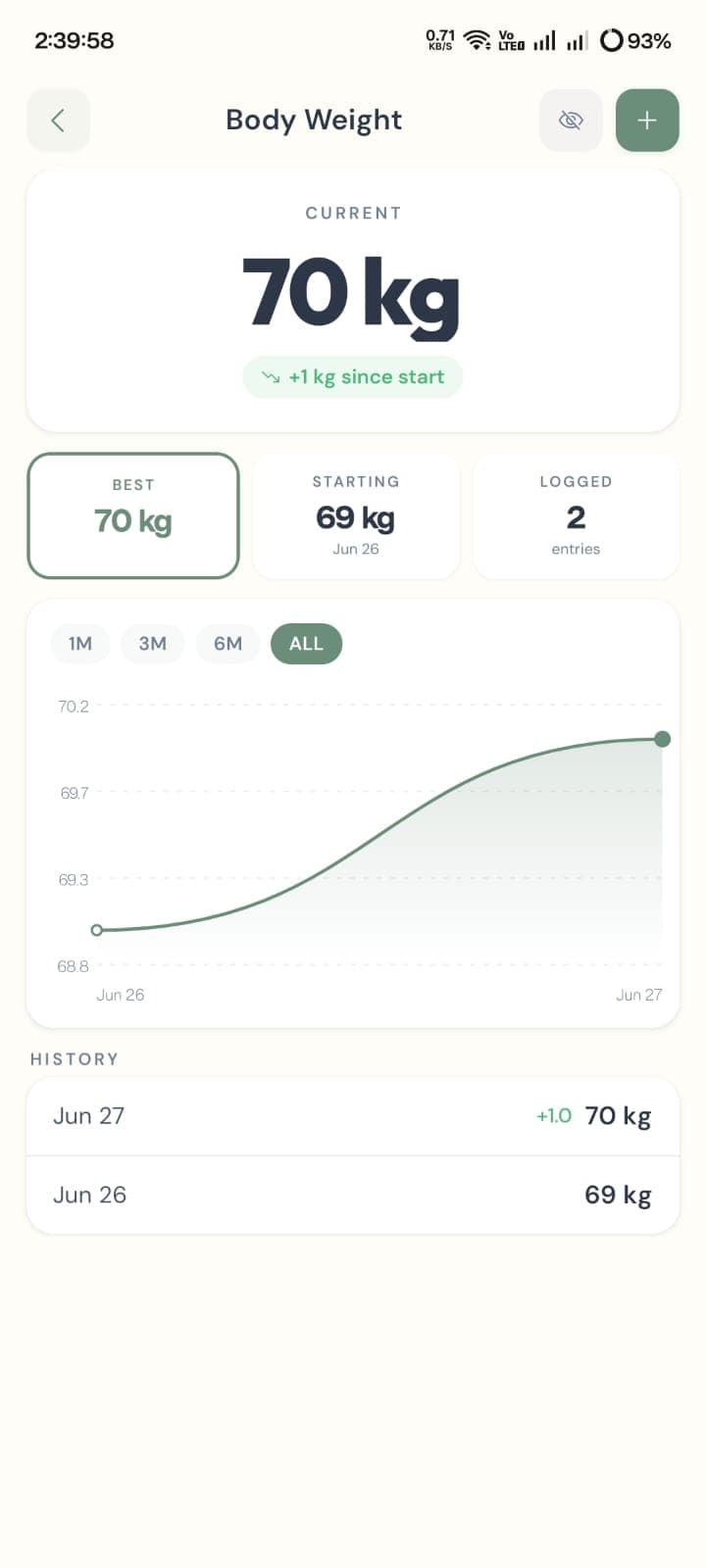
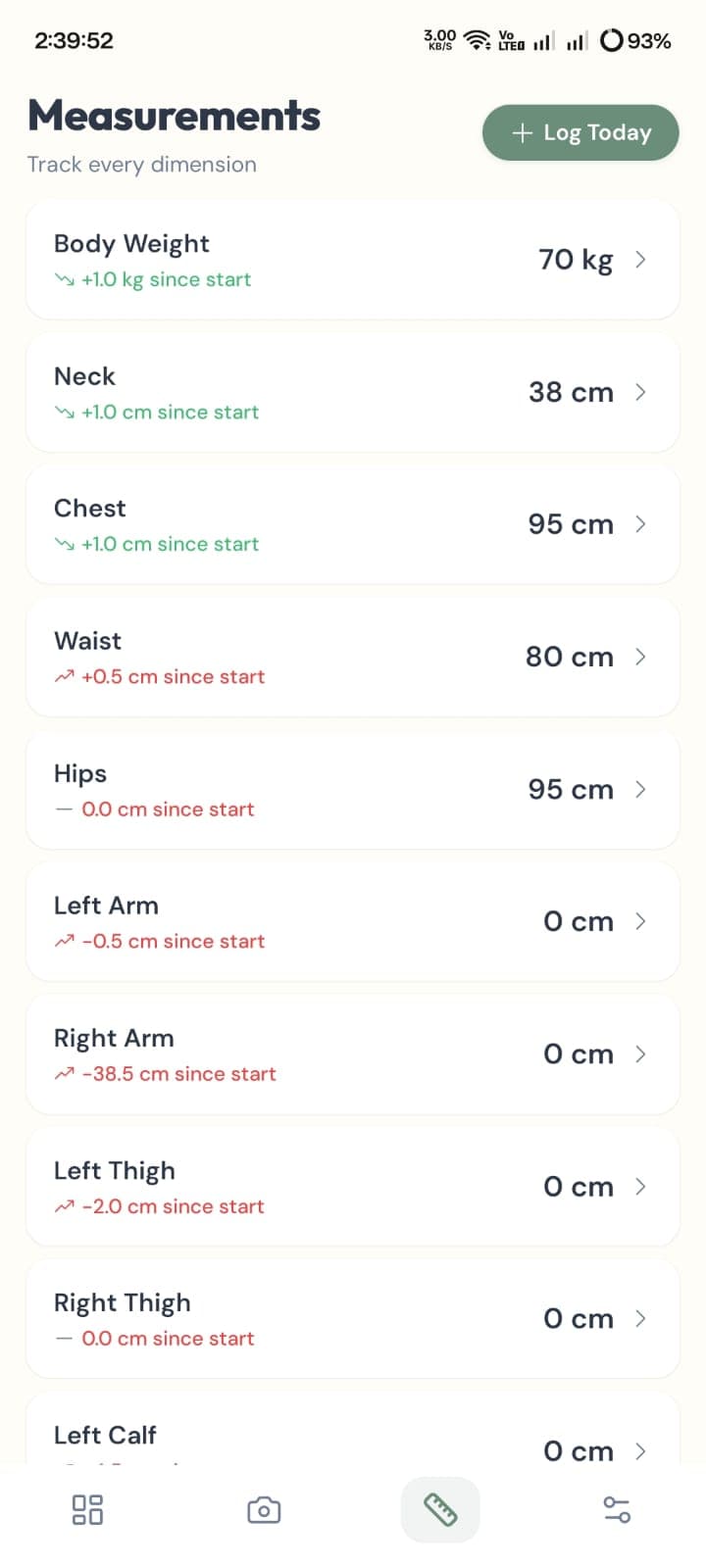
If you want a second signal that isn't affected by water balance the same way a bathroom scale is, a tape measurement of a fixed landmark or a consistent progress photo moves on a different timeline than water does, which is part of why tracking more than one signal tends to beat obsessing over any single number.
Bottom line
A 1 to 2kg overnight change is almost never fat. Glycogen and its bound water can account for more than a kilogram on their own within a few days; a period can reliably add close to half a kilogram; sodium's role is real in some contexts but weaker and less predictable than commonly claimed for ordinary meals. The trend across weeks is where the real signal is — the day-to-day number is mostly noise, and now you know what's actually making the noise.